
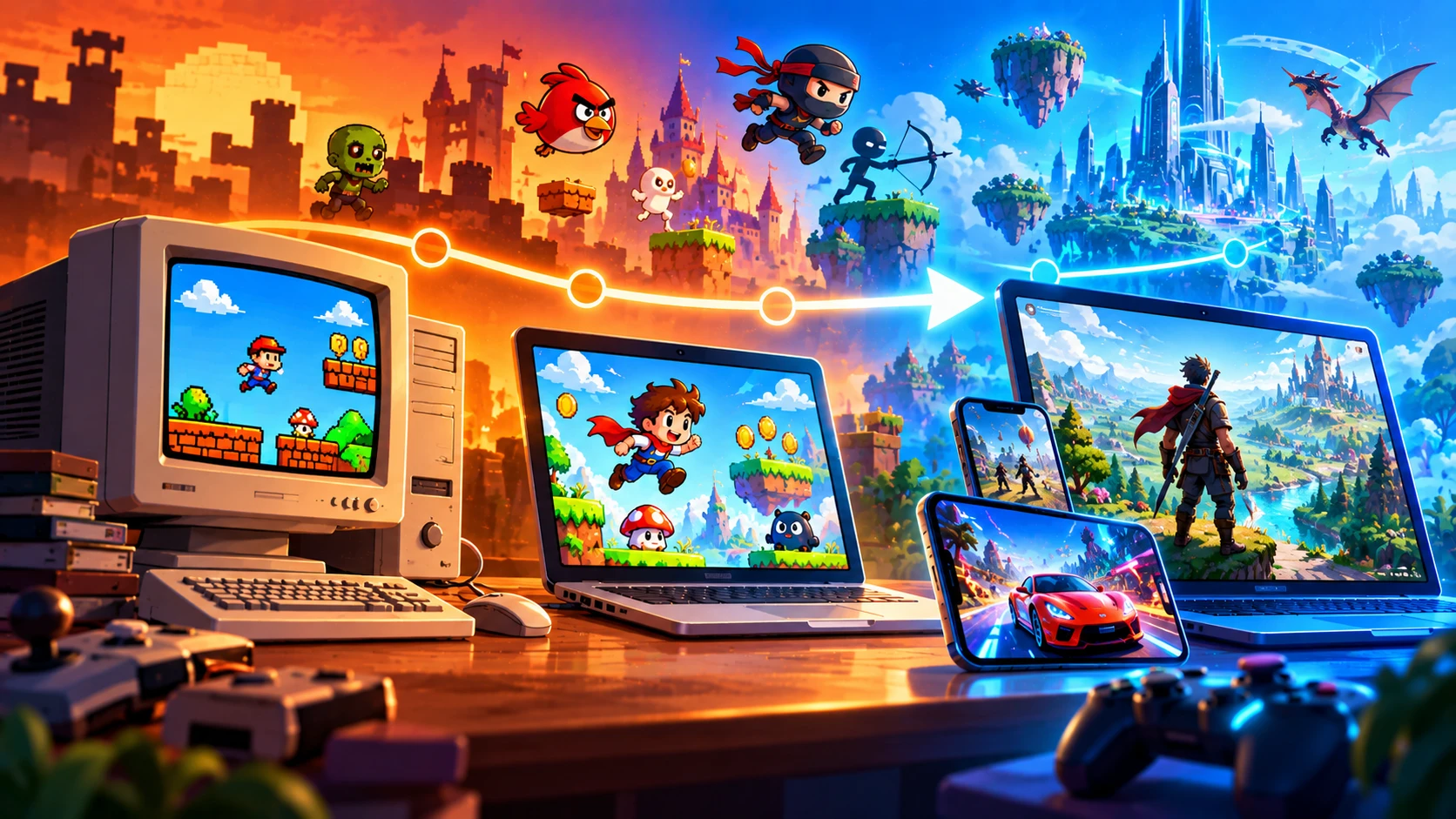
Web games have come a very long way. What started as simple text adventures and tiny animated pages has grown into a huge industry where players can enjoy rich 2D and even 3D games directly in a browser. Understanding this journey helps explain why browser gaming looks and feels the way it does today.
Let us walk through the major stages in the evolution of web games, from the early days to the HTML5 era.
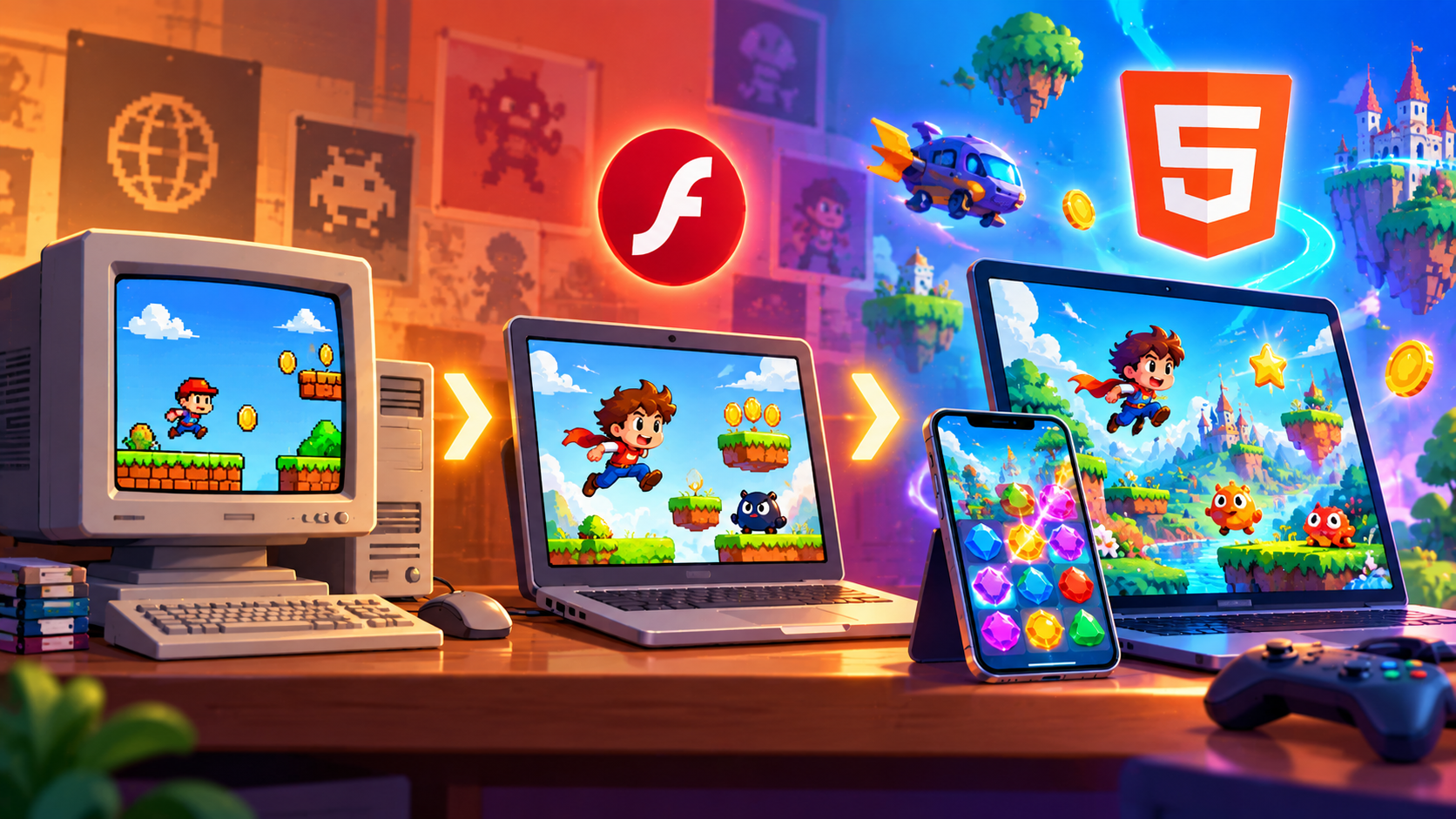
Stage 1: The Early Web (1990s)
In the early days of the internet, pages were mostly text and simple images. The first web games were basic: text adventures, simple quizzes, and click-based puzzles. Technologies like Java applets allowed small programs to run in a page, but they were slow to load and often unreliable.
Stage 2: The Rise of Flash (Late 1990s to 2000s)
Flash changed everything. It let creators combine animation, sound, and interactivity in small files that loaded quickly even on slow connections. Almost overnight, thousands of designers and hobbyists could publish games to the world.
- Easy to create: Flash tools were friendly to artists and beginners.
- Small downloads: Games loaded quickly on slow dial-up and early broadband.
- Huge creativity: Indie creators built experimental, funny, and addictive games.
- Game portals: Websites collected Flash games, and millions of people played daily.
For a whole generation, Flash games were the first gaming experience, played on school and home computers.
Stage 3: The Problems With Flash
As the web grew, Flash began to show its weaknesses:
- Security issues: Flash Player needed frequent security updates.
- Poor mobile support: Smartphones, especially iPhones, did not support Flash, and mobile quickly became the main way people used the internet.
- Performance and battery drain: Flash could be heavy on processors and batteries.
- Plugin dependency: Users had to install and update a separate plugin.
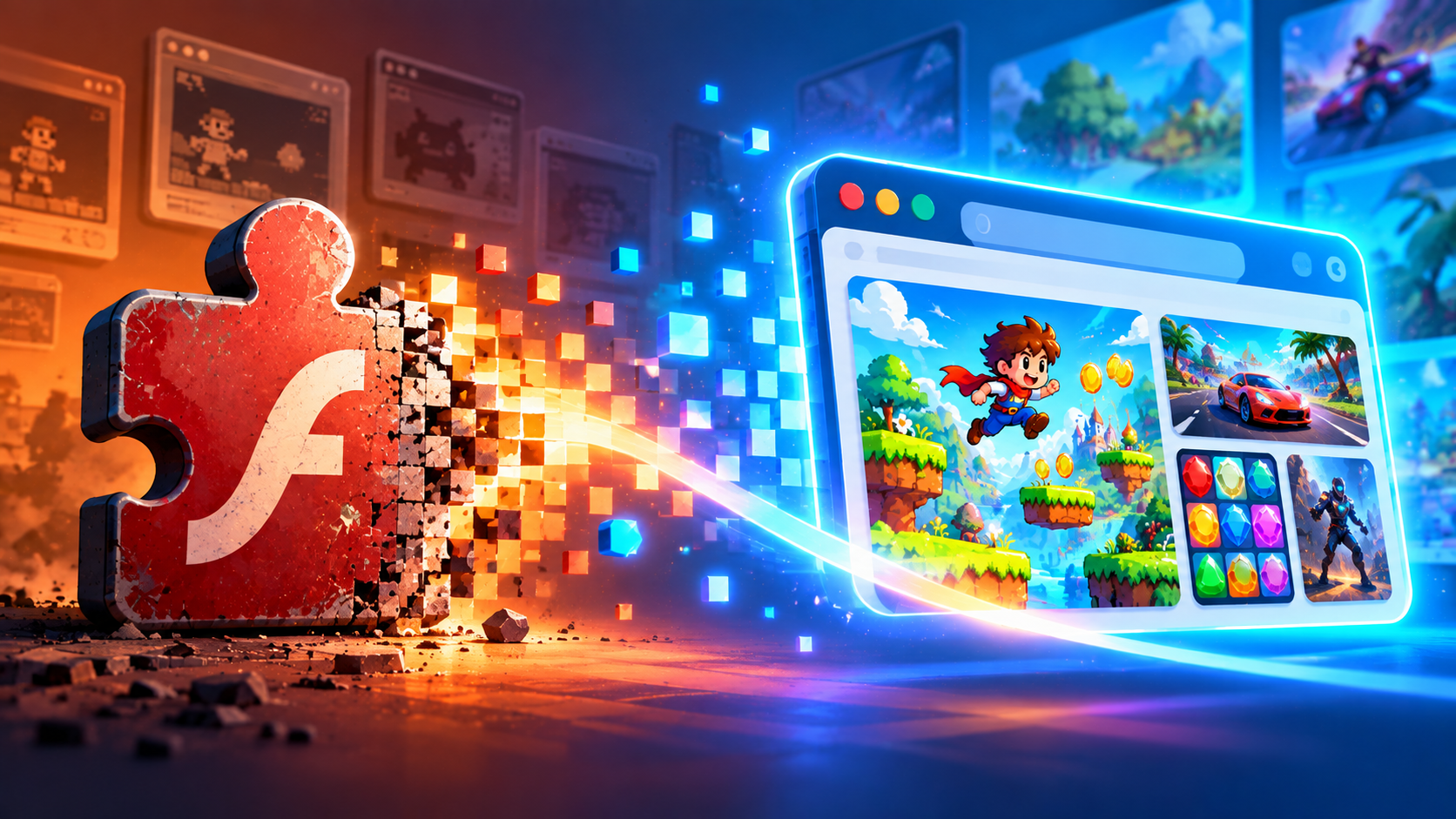
Stage 4: HTML5 Takes Over
HTML5 brought native support for graphics, audio, and video directly into the browser. With the Canvas element, WebGL, and powerful JavaScript engines, developers could build games that run anywhere without plugins. Phones, tablets, laptops, and even smart TVs could suddenly run the same game.
- No plugin required: Browsers handle everything natively.
- Cross-device: One game works on desktop and mobile.
- Better security: Games run inside the browser sandbox.
- Open standards: Anyone can build and share games using web technology.
The End of Flash
Adobe officially ended support for Flash Player at the end of 2020, and browsers removed it. Today, a few preservation projects, such as emulators that can run old Flash files safely, help keep classic games alive for nostalgia fans. Meanwhile, most active developers have moved to HTML5.
Stage 5: Modern Web Games and Beyond
Today's browser games are more powerful than ever. New technologies keep pushing the limits:
- WebGL: Enables detailed 3D graphics in the browser.
- WebAssembly: Lets complex, high-performance code run in the browser at near-native speed.
- Progressive web apps: Let games behave like installable apps with offline support.
- Game engines: Popular tools now export directly to the web, making publishing easier.
The future looks bright. Better graphics, smarter multiplayer, and faster loading are making browser games feel closer to traditional PC and console titles.
Flash vs HTML5 at a Glance
- Plugin needed: Flash required a plugin, HTML5 does not.
- Mobile support: Flash was limited, HTML5 works on all modern phones.
- Security: Flash had many vulnerabilities, HTML5 runs in the browser sandbox.
- Future: Flash is discontinued, HTML5 keeps evolving.
Frequently Asked Questions
Can I still play old Flash games?
Not in modern browsers directly, but some preservation projects and emulators allow classic games to run safely.
Are HTML5 games better than Flash games?
For most players, yes. They are more secure, work on more devices, and do not need extra software.
Will browser games get even better?
Very likely. Browser technology keeps improving, which means better graphics, performance, and features each year.
The Story Continues
From simple pages to rich HTML5 worlds, web games have grown alongside the internet itself. Explore today's best browser games at unique100.com and experience how far they have come.